
Contending With Conflict

Conflict is a natural part of life. It’s the vehicle that drives us to become persistent in prayer or stubborn in stagnation. It’s the friction that allows us to walk without slipping and the catalyst for change when we’d rather stay the same. The absence of conflict would cause many of us to settle for mediocrity, stunting our own growth. Conflict, when effectively managed, is necessary for our own personal development.

If you’ve ever been fed-up, let down, frustrated, aggravated, humiliated, or devastated by a loved one then you can testify that resolving conflict is often much easier said than done. Left unchecked, unresolved conflict  can lead to a lifetime of misery. It’s like a lethal level of bad cholesterol traveling through the arteries of your emotions, reeking havoc on the health of your heart. It attaches itself to unforgiveness and plagues the progress of intimacy in your relationships. It blocks the path to peace with the plaque of resentment. And often, it’s more damaging to your health than it is to that of your offender.

I’m 5’7″ and barely 120 lbs. So imagine my surprise when I received a call from my doctor’s office last year telling me I needed to lose 10 lbs. Umm, hello lady, I can’t afford to lose 10 lbs! I won’t be here! I thought for sure they got my lab work mixed up with someone else’s. I asked to speak with my doctor and she confirmed the results. Why was this woman telling me to lose weight? Apparently, my cholesterol was borderline high. ‘Scuse me, but I’m too healthy and too young to have cholesterol issues and I’m certainly not overweight. I’m trying to gain weight, not lose it! This was a sho nuff conflict and I needed an explanation.

According to my darling doctor, my borderline cholesterol levels were either hereditary, or the result of obesity, poor eating habits (I once had a dream that I had Krispy Kremes flowing thru my veins. I love Krispy Kremes. With a passion. 🙂 ) or I just wasn’t getting enough exercise. Well, I’m clearly far from obese, but the latter three reasons certainly applied. We agreed that it wasn’t necessary for me to lose weight as long as I committed to exercising at least 3 times/week and eating better. Otherwise, I would eventually have to resort to medication, and I don’t do drugs. So, I opted to just take better care of myself.

The conflict my doctor presented me with was really a blessing in disguise. High cholesterol runs in my family and I don’t want it to run through me. So if I manage it now I won’t have to worry about it running (and ruining) my life later.

When you’re presented with conflict, you can either avoid it or confront it. Avoiding my cholesterol conflict might have been the easier short-term solution. I wouldn’t have to exercise and I could continue to eat all the trans-fatty foods I wanted. I could have folded my arms, rolled my eyes, and sucked my teeth at my mom for passing her family’s genes on to me. I could have screamed and yelled about how unfair my potential diagnosis was. I could have said screw the doctor and opted to never get another check-up. All of that would have been much easier than doing the work necessary to be healthier. And chances are it might just kill me in the long run. I’d only be hurting myself.
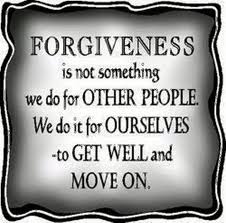
Unresolved conflict is dis-easing. Snacking on the “bad fat” of unforgiveness and resentment does more damage to your mental and emotional well-being that it does to the person you are at odds with. Abundant life and deadly strife can not co-exist. It’s like shadow-boxing with yourself and hoping to knock-out your opponent. Pointless. But resolving your conflict and resolving to move past your anger/hurt will reduce your stress and increase the flow of love, peace, and growth in your life. Don’t let it get so bad that you suffer an emotional stroke, a broken-heart attack, or need medication just to function properly. Instead, here’s what you do:

1. Acknowledge your feelings and confront your conflict.

2. Uncover the root of the conflict. After all, most conflict is a result of misunderstanding, not ill-intent.

2. Make every effort to be at peace with everyone (Hebrews 12:14) and confess your    contribution to the problem.

3. Feast on a healthy diet of God’s Word concerning your situation. When negative thoughts begin to growl, feed your appetite with applicable Scripture, not toxic thoughts and feelings.

4. Commit to a daily exercise regimen of forgiveness by submitting to the transforming power of the Holy Spirit.

What conflict are you avoiding? What bitterness and resentment have you allowed to block your heart from receiving God’s peace? Who are you refusing to forgive? Forgiving your offenders does not excuse their offense(s) or let them off the hook. It does, however, loose you from the chains that hold you captive to the hope that your past could have been any different or the lie that your future will never be complete. Forgiveness is a daily exercise in conflict management. Perhaps that’s why Jesus told Peter to forgive “seventy times seven” (Matthew 18:21)… because sometimes it’s a journey and not a destination. Sometimes it’s a process.

Conflict is not avoidable, but it is manageable. Manage yours before it manages you.

Every Breath I Take

Smiling BEFORE the 2012 Fight For Air Climb

I did it! I completed The Climb of My Life last Saturday… a 50 flight vertical challenge to help raise money and awareness for the American Lung Association. While I didn’t adequately prepare for the challenge (I should have started training 8-10 weeks in advance. Instead, I trained 6 days a week for 5 weeks), I managed to finish the Climb in 11:47:57. Woo-hoo!  I just knew it was going to take me 20 minutes to cross the finish line, so I’m pretty pleased (and pleasantly surprised) with my non-athletic, rookie results. 🙂

The Bell Atlantic Tower- 50 flights (1,088 steps) to the top. Whew!

But let me tell you… that doggone Climb was no joke! I was cool for the first 10 flights or so, but by the time I hit the 35th floor, I was like “Why the heck did I sign up for this?” My legs were hanging in there, but the higher I climbed, the harder it was to breathe.  I, along with many other climbers, was beginning to suffer oxygen debt (physiological state produced by vigorous exercise, in which the lungs cannot supply all the oxygen that the muscles need).

I could actually hear myself breathing- loudly. Felt like my nose and mouth were Saran-wrapped. Now I really know why this is called the Fight for Air Climb. Sheesh! For the last 15 flights or so, all I could hear in that warm, narrow stairwell was the heaving surround sound of men and women trying to reach the top of the tower. Cool air was blowing from the vents but that offered little comfort. I began to feel nauseous. I wanted to give up in the. worst. way. Shoot, I willfully enlisted in this… I didn’t have to finish! Every breath I took felt like torture. You couldn’t tell me my head wasn’t about to explode. And I volunteered for this mess.

Yes, I volunteered for it. And I’m going to do it again next year. There are so many people in this world who don’t volunteer to have difficulty breathing: children plagued with asthma, people suffering from COPD (Chronic Obstructive Pulmonary Disease) attributed to air pollution, and the roughly 3,400 nonsmoking American adults who die of lung cancer each year as a result of breathing second-hand smoke. This Stair Climb made me ever so thankful for healthy lungs and my ability to inhale and exhale without difficulty or distress. Every breath I take is a blessing. I want to continue to breathe awareness about the deadly disease that strangles the air from so many- including my father.

I have a new-found respect for all the Firefighters of the world. Some of these guys finished The Climb quicker than me- wearing all their gear/equipment!

Why are the lungs important? Here’s what the American Lung Association has to say:

Text Box: Did You Know?  •	The right lung is slightly larger than the left.  •	The surface area of the lungs is roughly the same size as a tennis court.  •	A sneeze travels faster than a cough (60 vs 100 miles an hour).  •	A person at rest breathes about 12 to 15 times a minute.  That is at least 17,000 times a day and over 6 million breaths a year.

Oxygen, a basic gas, is needed by every cell in your body in order to live. The air that comes into the body through the lungs contains oxygen and other gases. In the lungs, the oxygen is moved into the bloodstream and carried through the body. At each cell in the body, the oxygen cells are exchanged for waste gas called carbon dioxide. The bloodstream then carries this waste gas back to the lungs where the waste gas is removed from the blood stream and then exhaled from the body. This vital process, called gas exchange, is performed automatically by the lungs and respiratory system.

In addition to gas exchange, the respiratory system performs other roles important to breathing. These include:

  • Bringing air to the proper body temperature.
  • Moisturizing the inhaled air to the right humidity.
  • Protecting the body from harmful substances. This is done by coughing, sneezing, filtering, or swallowing them.
  • The sense of smell.

WOW… our lungs are heavy-duty machines! Exercise is crucial to the maintenance of our lungs and our bodies as a whole. And stair climbing is great exercise! According to Dr. Oz, “Fitness gains from doing 11 minutes of daily stair climbing for eight weeks rival those of walking 36 minutes a day for six months.” Now put that in your pipe and smoke it (no pun intended)! When we don’t take care of our lungs, we decrease our ability to breathe freely and increase our risk for lung disease, stroke, and heart disease. I don’t like the sound of that.

And neither should you. Think you’re at risk? Know the Warning Signs. And understand what smoking does to your body.

Don’t voluntarily restrict your respiration. Do whatever it takes to lower your risk for lung disease. And take action to join the fight for healthy air. Changing an unhealthy lifestyle may be difficult, but it’s worthwhile. Take one step at a time.

Those few breathtaking minutes in that suffocating stairwell poignantly proved just how much I’ve taken advantage of my ability to breathe. Lord, please forgive me for taking my breath for granted. Every single one of the 17,000 breaths I take per day is a gift. Help me to use my gifts wisely… responsibly. With every breath I take, help me to speak life and not death. Help me to lift up and not tear down. Help me to spread Your Word, and not spread rumors, lies, and gossip. Show me how to be a better steward of the lungs You entrusted to me. Recognizing that every breath I take is on loan from You, show me how to use it for Your glory. You are the Air I breath. Amen.

~~~~~~~~~~~~~~~~~~~~~~~~~~~~~~~~~~~~~~~~~~~~~~~~~~

Do you know someone who has suffered from asthma, pneumonia, COPD, bronchitis, emphysema, lung cancer, SIDS (Sudden Infant Death Syndrome) or any other lung disease? Are you concerned about a loved one’s smoking habit? Please share your story/their story below. Your testimony could be the very catalyst necessary to change someone else’s life!